
The Camino Finisterre traverses the mountains and high moors of Galicia along solitary stretches towards sparkling views of the cape. It’s one of the shortest Caminos, and the only route to begin in Santiago de Compostela.
The bustling fishing port of Finisterre (Fisterra in Galician) was once believed to be the end of the world. Its name is derived from the Latin finis terrae, meaning land’s end.
For first-time pilgrims, it offers a taste of the Camino experience, without having to commit to a longer trip. With fantastic coastal views and terrain that presents a decent challenge, it can make a great mini-pilgrimage for those short on time.
The Route
The trail starts from the Cathedral in Santiago and stretches approximately 90 km across the rolling hills of Galicia to Finisterre on the west coast of Spain. The route can be walked in both directions, but is often undertaken as an extension to a longer Camino. It takes on average 3-4 days to complete, with stages between 20 and 35 km.
Partway through the 3rd stage, the route divides offering two options. The first option takes you directly to Finisterre. The second option leads to the port of Muxía, before heading south along the coast. The extension to Muxía will add an extra day and approximately 30 km to your journey.
Waymarking is plentiful. The distinctive yellow arrows, and symbolic scallop shell, mark the way on rocks, trees, and buildings along the route.
Where to Start?
The Camino Finisterre begins at the Cathedral in Santiago de Compostela.
Santiago de Compostela → Finisterre (90 km to Finisterre)
Santiago de Compostela → Muxía → Finisterre (116 km to Finisterre)
Although most pilgrims begin in Santiago, you could walk the route in reverse, starting at Finisterre and making your way inland.
The most convenient airport is Santiago (SCQ). If you cannot get a direct flight from your location, you can fly into another Spanish city and continue your journey by train or bus. To find the best route from your home country, use a journey planning tool like Rome2Rio.
Terrain
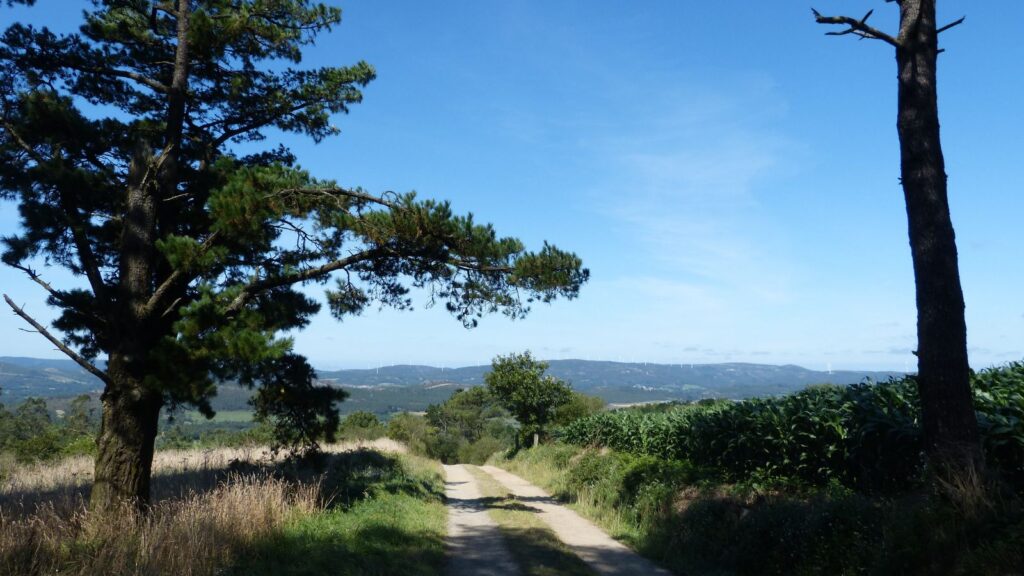
The trail winds its way through scrubland and eucalyptus & pine forests. Underfoot you’ll find a mixture of gravel track, forest paths, and dirt road. Some road walking is required, particularly when entering and exiting towns and villages. However, much of the journey is spent traversing the high moors and hills towards the cape.
The route is undulating throughout, and some of the longer stretches can be physically demanding. The first day from Santiago to Negreira has a steep climb to Alto do mar de Ovella – 200 m in less than 3 km!
The final day is the longest and includes an isolated 12 km stretch between Hospital and Cee. This is one of the most beautiful and exposed sections, so come prepared with plenty of water, snacks and sun protection.
Your efforts are rewarded on the final approach, with sparkling sea views and a 2 km stroll along the gorgeous white sands of Langosteira Beach.
Towns and Villages
The trail passes through towns, villages and tiny hamlets. The towns on route include: Negreira, Olveiroa, Cee, Corcubión, and Finisterre.
Cee is the largest of the towns and has all the facilities you’d expect, including hotels, bars, and restaurants. Negreira is also a substantial size with supermarkets, cafes, and cash machines available. In tiny hamlets, facilities can be limited, and the albergue may be the only place offering drinks and a meal.
The seaside towns of Cee and Finisterre offer plenty of opportunities for eating out. Finisterre has a large fish market, and there are several seafood restaurants overlooking the harbour. Platters can include mussels, oysters, scallops, prawns, and octopus.
The Lighthouse
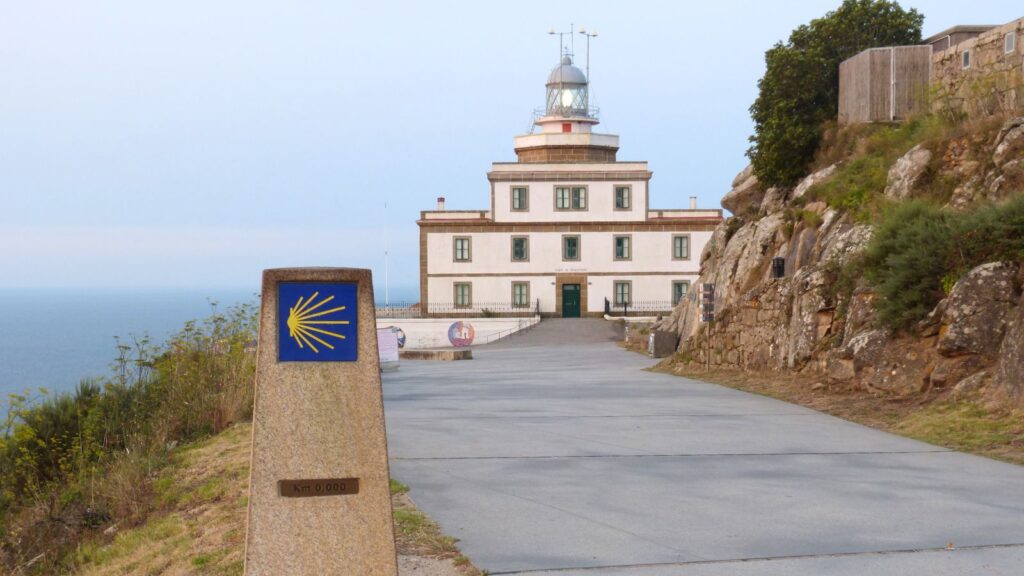
The lighthouse at Cape Fisterra is a further 3 km hike from the town centre. Here you will find the 0.00 km waymark, representing the end of the journey for many pilgrims who began their Caminos weeks or months before.
Arriving at the lighthouse at Finisterre can be a meaningful end to your journey. It was certainly a memorable experience for me after my first Camino – getting that final stamp, and staring out across the Atlantic as the sun went down. It was a moment filled with both reflection and excitement for adventures ahead.
Close to the lighthouse, looking out to sea, there is a large stone cross. This is usually decorated with stones, shells and little notes. These small objects are often left as symbols of gratitude, or in remembrance. This is part of Camino tradition, so you may want to leave a message or memento of your own. However, remember to be respectful and ensure your contributions can be easily removed.
Many pilgrims choose to rest in the town, before heading up to the lighthouse in the evening to watch the sunset. If you decide visit the lighthouse in the evening, remember to bring a torch or book a taxi back. The road has limited space for pedestrians, can be busy with traffic, and is not well-lit.
When to Go?
April to October is recommended. The route is becoming more popular, but you can still find solitary stretches for reflection. Spring is quieter with fewer pilgrims on the route, and the weather is cooler, but also wetter. In Galicia rain should be expected year round. Summer is usually hot and busy, with albergues filling up more quickly.
Accommodation
Accommodation is not as abundant as on the Camino Francés, and can be limited to just one albergue in smaller settlements. However, it is still sufficient and other types of accommodation are available if you are prepared to be flexible. Accommodation is also available between the main towns and villages. So, if you want a more relaxed Camino, you could split some of the longer stretches extending the route over 5 to 6 days.
Municipal albergues
Municipal albergues (operated by the Xunta de Galicia) are located at Negreira, Olveiroa, Finisterre, and Muxía. These pilgrim hostels are the cheapest and most basic type of accommodation. They cannot be booked in advance, and offer priority to pilgrims making the journey on foot. To stay in accommodation specifically reserved for pilgrims, you will be required to present your pilgrim passport.
Private albergues
These are also available in towns and some villages along the route. They usually offer private rooms and additional facilities such as washing machines and tumble dryers. They are more expensive than municipals but usually allow bookings in advance. Alternative accommodation is available in the larger towns in the form of Casa Rurales, Hostales, or Hotels.
Fisterrana and Muxíana Certificates
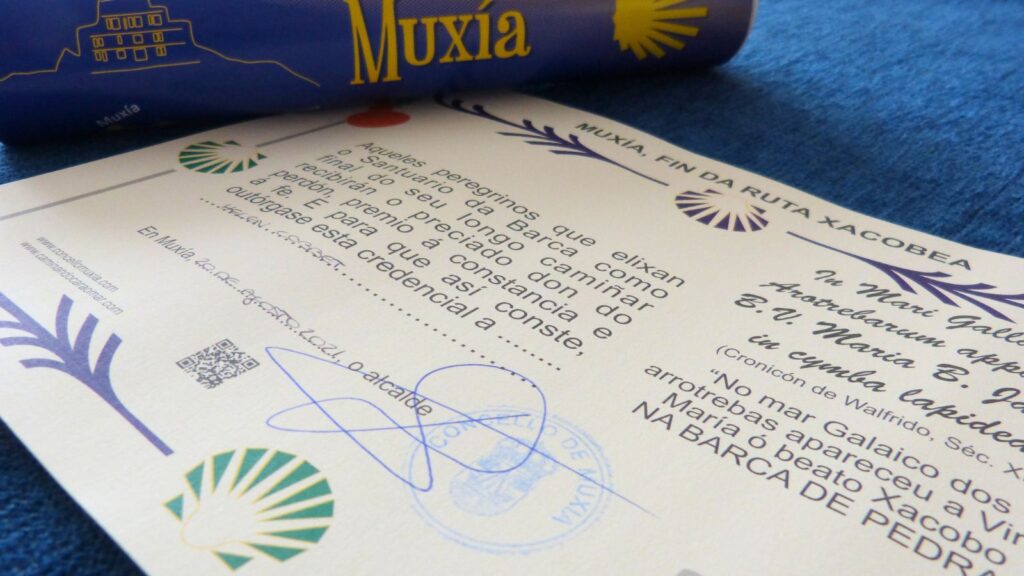
If you are walking from Santiago to Finisterre, you will be eligible to collect a certificate of completion called the Fisterrana. If walking to Muxía, you can collect the Muxíana. To qualify, you will need 2 stamps per day in your Pilgrim Passport. Issuing locations for the certificates occasionally change, so check with the local tourist offices upon arrival.
If you choose to walk the route in reverse (starting from Finisterre), be aware that you will need to go via Muxía in order to clock up the minimum 100 km required to collect your Compostela Certificate in Santiago. If you want to learn more about collecting the Compostela, you can read What Is the Compostela Certificate and How Do You Get One?
The Camino Finisterre is a short, beautiful route that can serve as a great mini-pilgrimage, or be the highlight at the end of a longer journey.
Want to hike the Camino Finisterre? Then it’s time to get planning. Check out Camino Planning for more ideas and inspiration.