
The Camino del Norte was first established in the Middle Ages, when it was used by pilgrims arriving in Spain via the northern ports.
Without the crowds of the Camino Francés, it can be a great alternative for first-time Pilgrims seeking a more solitary Camino.
One of the hillier routes, the Camino del Norte presents a substantial physical challenge, rewarded by stunning views of the coast.
📋 Table of Contents
The Route
The trail starts from the border town of Irún, and stretches approximately 815 km across northern Spain to Santiago de Compostela. It can be divided into roughly 34 stages, with stretches varying in length from 10 to 40 km per day. It takes on average 5 to 7 weeks to complete in full.
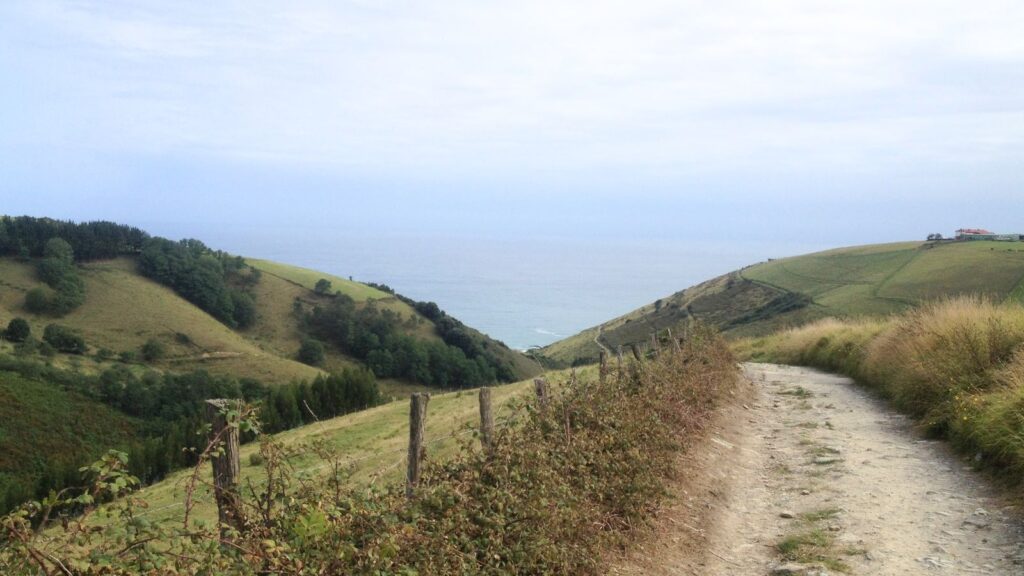
The Camino del Norte travels through four distinct regions. Setting off from the Basque Country, the route passes through several seaside towns, before crossing the beaches and meadows of Cantabria and Asturias. The route then turns inland over the hills of Galicia, to join up with the Camino Francés at Arzúa.
Waymarking is sufficient, but not as prolific as on the Camino Francés. The distinctive yellow arrows mark the way on rocks, trees, and buildings along the route. It can be tricky to pick up the trail in urban areas. However, a route-finding app will get you back on track, that’s if a friendly local hasn’t already!
The symbolic scallop shell is used to waymark the route throughout, but it’s worth noting the variations between regions. In Asturias, the base of the shell indicates the direction of travel. However, in Galicia it’s the opposite, with the shells’ rays pointing the other way.
Where to Start?
There are several convenient starting points Camino del Norte, however the most popular are:
Irún (815 km to Santiago)
For a shorter Camino:
Santander (260 km to Santiago)
The closest airport to Irún is San Sebastián (EAS). However, Biarritz (BIQ) offers more international connections, and is only 30 mins away by bus. Santander also has the benefit of having its own airport. Where you fly in to will largely depend on where you are travelling from. To find the best travel options from your home country you can use a journey planning tool like Rome2Rio.
Terrain
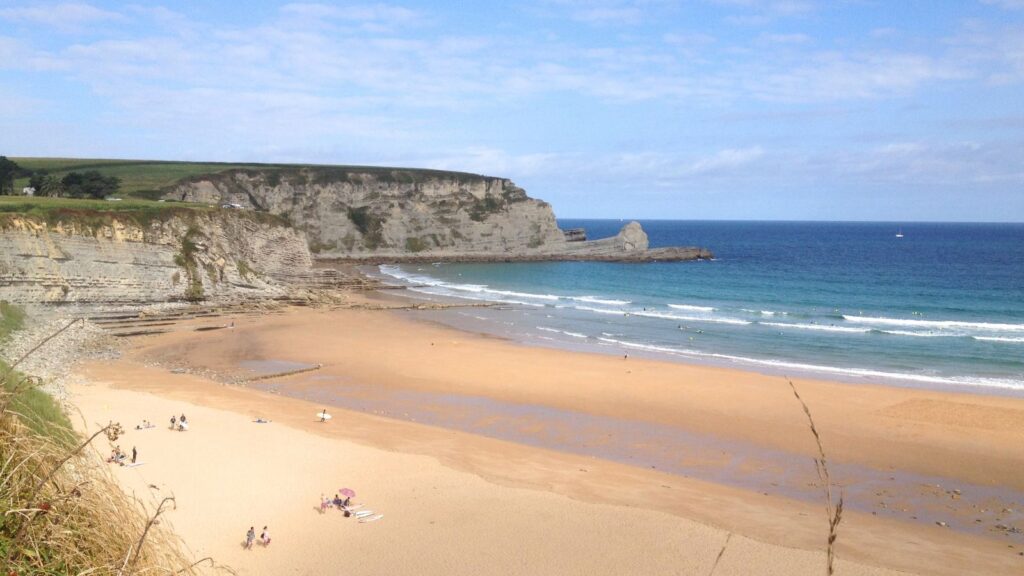
The terrain varies greatly, from forest tracks and rocky paths to beaches and man-made walkways. You’ll find more road walking than on the Camino Francés, particularly in Asturias. The stretch from Gijón to Avilés has some particularly grey kilometres! However, this is balanced by days spent walking along lush green coastline. Many find the stunning beaches of San Sebastián and Laredo more than make up for the stretches of tarmac.
Its hilly terrain, and some particularly long stretches between rest-stops, can make the Camino del Norte a challenging route. It can certainly feel like a step-up from the Camino Francés, in terms of the physical challenge. Good hiking footwear is essential, and you’ll want to take care of your feet to prevent blisters.
One of the most strenuous stages is from Deba to Markina. This day involves a significant amount of accumulated ascent, descent, and a long 16km stretch without services. After leaving the rolling hills of the Basque country, the ascents become less dramatic, but the 37km stretch between Santander and Santillana del Mar still presents a considerable challenge. The trail flattens out a bit after Gijón until it reaches Ribadeo where it starts undulating again across the hills of Galicia.
Towns and Cities
The trail passes through numerous cities, towns, and villages. Many pilgrims choose to take a few rest days along the way to recover, and take in the sites and culture.
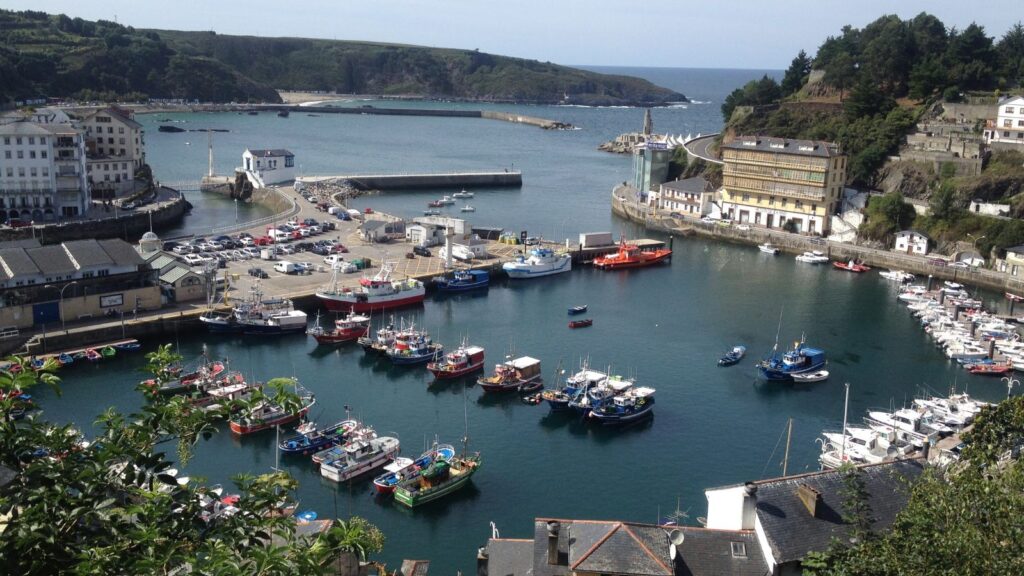
Notable towns and cities on route include: San Sebastián, Bilbao, Castro Urdiales, Santander, Santillana del Mar, Ribadesella, Gijón, Avilés, Luarca, Ribadeo, Mondoñedo, and Sobrado dos Monxes.
With many of the coastal towns and cities being attractive holiday destinations, there’s plenty to explore once you arrive. Relax on the beautiful La Concha Beach in San Sebastián or visit the famous Guggenheim in Bilbao. You could even spend an afternoon exploring the historic streets of Santillana del Mar. Stunning beaches, historic sites, museums, and parks, make the cities and towns great places to spend a rest day.
It’s worth noting that seaside towns will cater primarily to holidaymakers. So, the typical cheap set-menu for pilgrims (a staple on the Camino Francés) is less common. However, you can usually find a reasonably priced set menu. Alternitively, opt for some tasty tapas (called pintxos in the Basque Country). Many local restaurants will have a variety of seafood on the menu – everything from hearty cod stews to fried squid and octopus.
When to Go?
May to October is recommended. The trail passes along Spain’s Costa Verde (Green Coast) and the oceanic climate means temperatures can be cooler, and less stable than on the Camino Francés. July and August are more likely to be warm and sunny. However, wet, windy, and cloudy days are to be expected at any time of the year. I spent much of my first trip on the Camino del Norte crunching along the trail in a bright blue plastic poncho… and that was in August!
The route is less crowded than the Camino Francés, but accommodation can be sparse in some areas, with a few albergues having limited capacity. Although you’re likely to encounter fewer pilgrims on the route, accommodation can still fill up quickly, especially in August during the Spanish holidays.
Accommodation
Accommodation is not as plentiful as on the Camino Francés and is spread out along the route, requiring pilgrims to hike some long stretches. A good option can be to split longer sections by taking a taxi from your finish point to your accommodation and then back again the following morning.
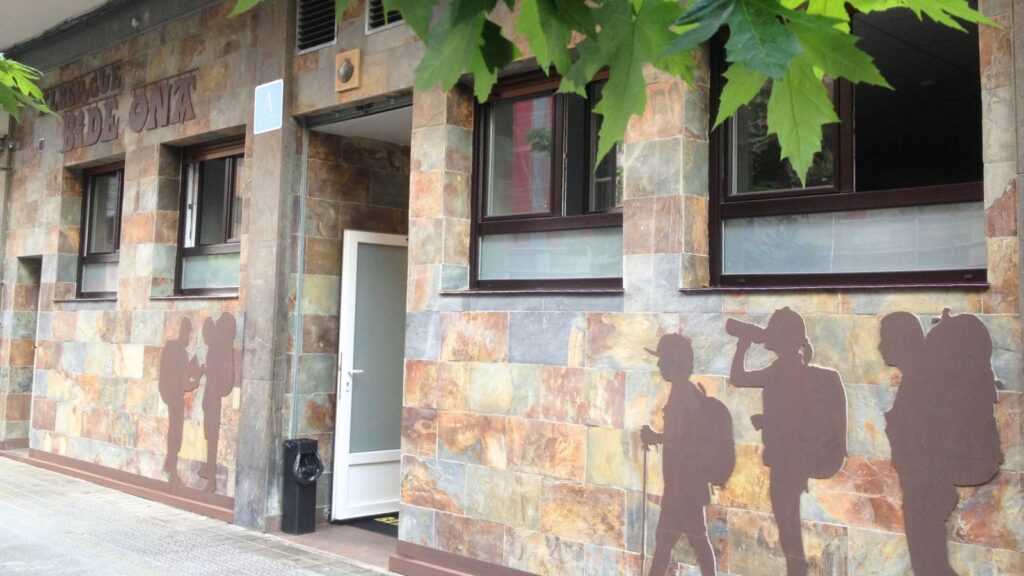
Many choose to stay in municipal albergues. These pilgrims’ hostels are the cheapest and most basic type of accommodation, dormitory-style and usually bunk beds. They cannot be booked in advance and offer priority to pilgrims making the journey on foot. Not every town on the Camino del Norte has a municipal albergue. Be prepared to stay in a variety of accommodations along the way and factor this into your Camino budget.
Some private albergues are also available, offering dormitories with fewer beds, private rooms, and additional facilities such as washing machines and tumble dryers. They are more expensive than municipals but usually allow bookings in advance.
Alternative accommodation is available in most larger towns and villages in the form of Casas Rurales, Hostales, or Hotels. Pilgrims may find themselves competing with holidaymakers for this type of accommodation, particularly in seaside towns, and prices will reflect the demand. If travelling during the peak months it may be beneficial to book in advance or be prepared to make a short taxi ride away from the tourist hot spots.
The Camino del Norte converges with the Camino Francés for the final two stretches to Santiago. This section can get extremely busy, and it may be worth pre-booking accommodation to avoid getting caught up in a ‘race for beds’. The Camino del Norte is a challenging route with plenty of sparkling coastline, sandy beaches, and rolling hills. It makes a great choice for the adventurous pilgrim seeking more solitary stretches.
Want to hike the Camino del Norte? Then it’s time to get planning → Start Here for practical tips and advice on how to get started.
Curious to learn about the other routes? Download your Free Camino Planning Starter Pack which includes both a Routes Summary and a Distances Comparison Table.