
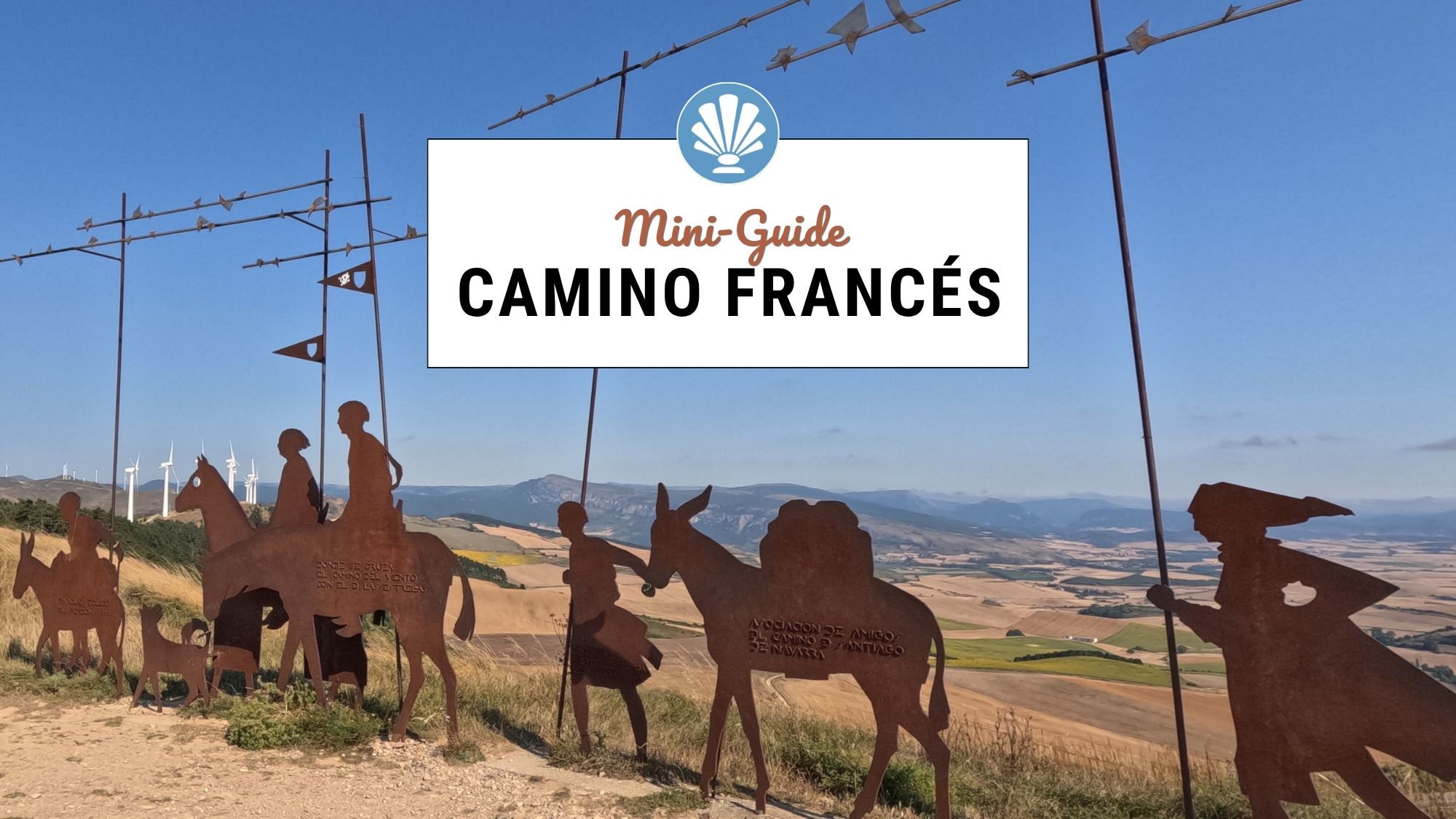
The Camino Francés, also known as The French Way, is the most well-known and popular of the main Camino routes. This classic trail has been the inspiration for numerous books and documentaries over the years and was the setting for the popular 2010 movie The Way, starring Martin Sheen.
With its well-marked trail and excellent infrastructure, the Camino Francés makes a great choice for first-time pilgrims.
Most pilgrims registering in Santiago have arrived there via this route, with many of them joining at Sarria for the last 100km.
Although it’s getting busier every year, the Camino Francés still has plenty to offer in terms of community and cultural experience – and remains my favourite Camino route.
📋 Table of Contents
The Route
The route starts in the French town of Saint-Jean-Pied-de-Port, crosses the Pyrenees and stretches approximately 780km across Spain to the Cathedral at Santiago de Compostela. It can be divided into 33 logical stages, covering 18-30 km per day, and takes on average 4-6 weeks to complete in full.
The Camino Francés takes you on both a spiritual and cultural journey, travelling through four distinct regions of northern Spain. Starting in Navarre, the route passes through the wine country of La Rioja, crosses the flat central plains of Castilla y León, and finishes by traversing the tree-covered hills of Galicia.
Along the way you will encounter many historical sites and pass numerous churches and places of spiritual significance.
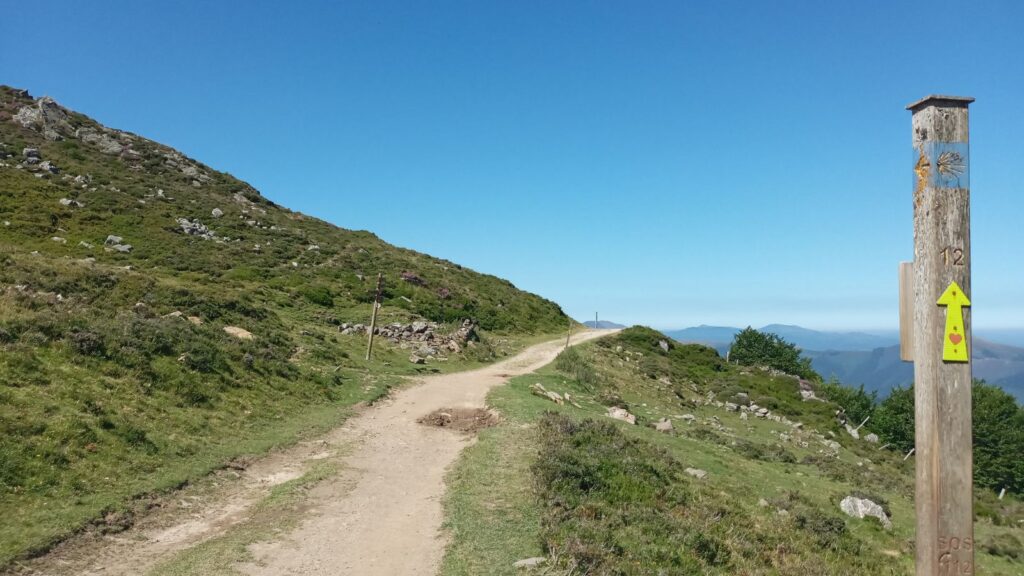
Waymarking is abundant, and the distinctive yellow arrows (and symbolic scallop shell) mark the way on rocks, trees, and buildings along the route.
Where to Start?
Although you could begin anywhere along the route, the most popular starting points for the Camino Francés are:
Saint-Jean-Pied-de-Port (780km to Santiago)
Sarria (114km to Santiago)
Sarria is a popular choice as it fulfils the minimum distance requirement to qualify for the Compostela Certificate. The most convenient airports are usually Biarritz (BIQ) for St Jean, and Santiago (SCQ) for Sarria, however this may vary depending on where you are flying from. To find the best route there from your home country use a journey planning tool like Rome2Rio.
Terrain
The trail is a mixture of forest tracks, rocky paths, dirt roads, and yes… some tarmac. Passing through urban areas does require a significant amount of road walking, particularly when entering and exiting cities. However, don’t let this put you off, it is balanced by plenty days of walking through the beautiful Spanish countryside, and most pilgrims embrace the contrast as part of the experience. The bleak stretches can really enhance your appreciation of the beautiful ones.
A large proportion of the route is flat, but the challenge presents itself in the climate (it can be very hot in summer!) and distances covered over multiple days. It is achievable for the moderately fit, but not to be underestimated, and there are a few challenging ascents to test the legs and lungs.
One of the most strenuous days comes right at the start, crossing the Pyrenees from Saint-Jean to Roncesvalles, clocking up over 1,000m of ascent. After the long flat stretches of the Meseta (Spain’s central plateau) comes the climb to the highest point on the Camino Francés, Cruz de Ferro. This is followed, just a couple of days later, by another steep ascent to O Cebreiro marking the crossing into Galicia.
Towns and Cities
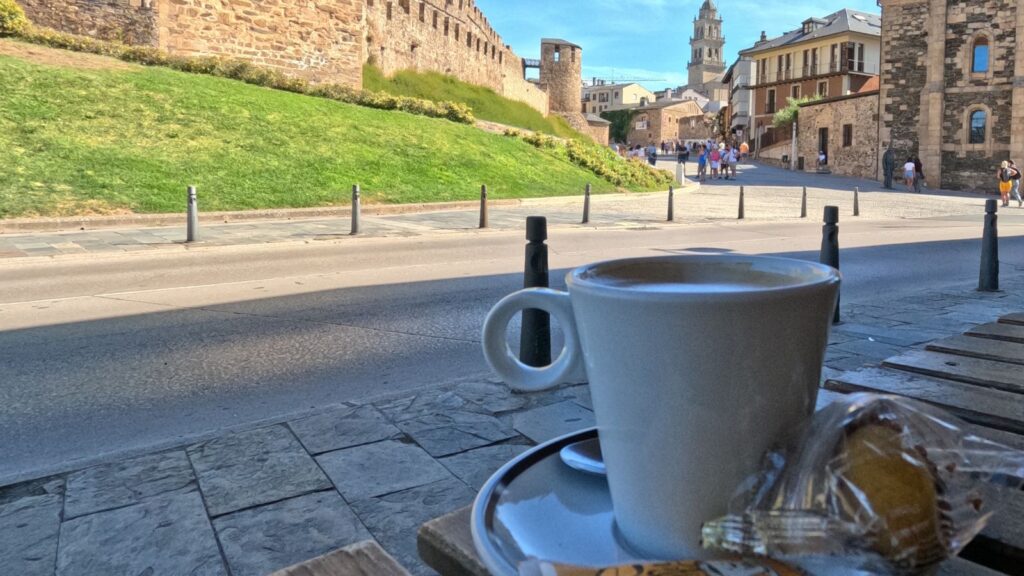
The trail passes through many cities, towns, and villages, but with nearly 800km to cover there can be limited time to explore. Many pilgrims choose to take a few rest days along the way to allow the body time to recover, and to take in some of the sites and culture. Some notable towns and cities on route include; Pamplona, Puente la Reina, Estella, Logroño, Burgos, León, Astorga, Ponferrada, and Sarria.
The towns and cities have plenty to offer the curious pilgrim – the stunning gothic architecture of the cathedral in Burgos, the taperias crammed into Logroño’s old town, as well as numerous other sites, museums, and parks. You could even find yourself caught up in one of Spain’s many festivals, like the famous San Fermin in Pamplona, or Saint John’s Eve celebrations in León – one of my favourite Camino memories was an evening spent in beautiful square in León during this festival.
The numerous restaurants, cafes, and bars offer you a chance to sample some traditional dishes. The pintxos of Pamplona, hearty stews in Castilla y León, or octopus in Galicia. With many offering a special set menu for pilgrims at a reasonable price there are plenty of opportunities to eat well, even on a modest budget. I don’t know how it’s possible, but I think I gained 10lbs on my first Camino… another good reason to pack light!
When to Go?
April to October is recommended. The winter months are quieter with fewer pilgrims on the route, but by early spring it starts to get busier. July and August used to be the peak months. However, there has been a recent shift towards May and September becoming more popular, perhaps reflecting a preference to stay out of rising temperatures. During warmer months the route can feel crowded (particularly after Sarria) with accommodation high in demand.
Each region has its own particular climate. The central plateau between Burgos and Astorga (the Meseta) is known for its very hot and dry conditions during the summer months. In contrast Galicia’s microclimate means you can expect rain in this region at any time of the year. Waterproofs are essential, whatever the season!
Winter conditions can be more challenging, and the mountainous regions like the Pyrenees, Montes de León, and O Cebreiro should be avoided at this time of year due to snowfall.
Accommodation
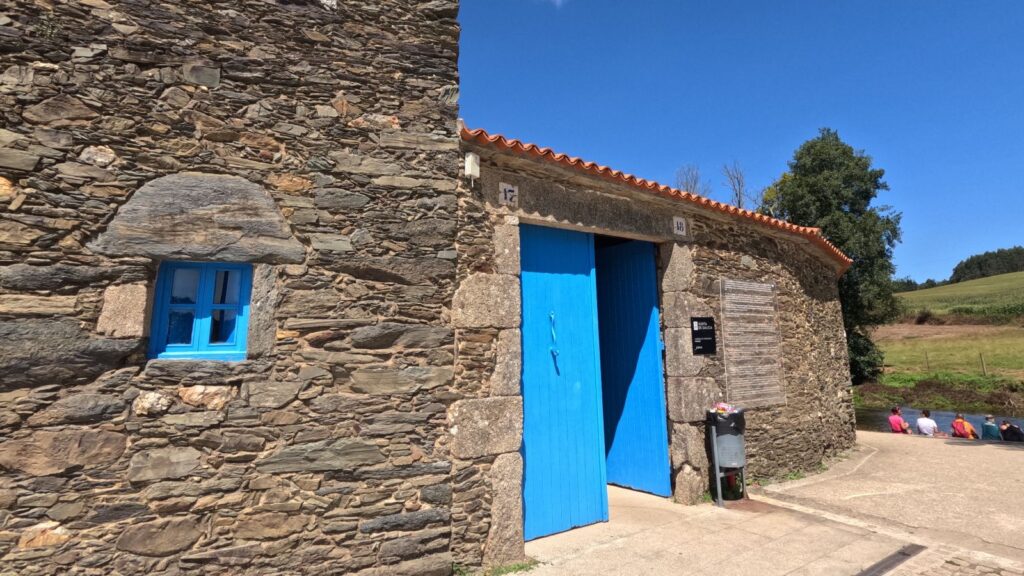
Accommodation is plentiful on the Camino Francés. Many new albergues have sprung up along the route in recent years making it possible to tailor the length of daily stretches to suit individual preferences and ability.
Many pilgrims choose to stay at municipal albergues. These government-run pilgrim hostels are the cheapest and most basic type of accommodation, with a dormitory-style set-up (usually bunk beds). They tend to fill up quickly, cannot be booked in advance and offer priority to pilgrims making the journey on foot.
There are also many private albergues on the route, with some offering private rooms, and additional facilities such as washing machines and tumble dryers. They are more expensive than municipals but usually allow bookings in advance. Alternative accommodation is available in many towns and villages in the form of Casa Rurals, Hostales, or Hotels.
The Camino Francés has a great deal of flexibility in terms of accommodation, the exception is the final 100km from Sarria, which gets extremely busy. It may be worth pre-booking your accommodation for this stretch to avoid getting caught up in a ‘race for beds’.
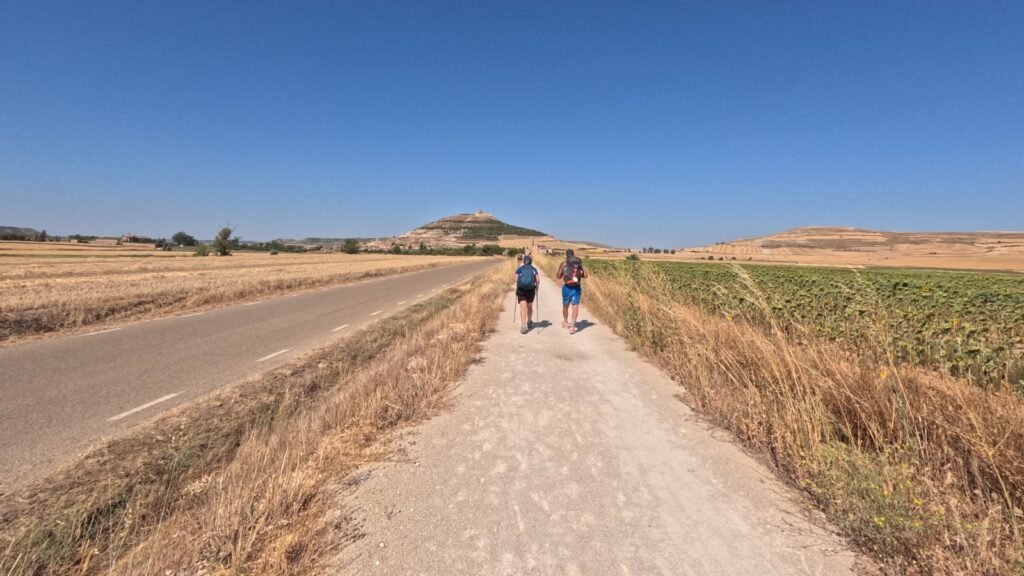
The Camino Francés makes a great first Camino. Although undoubtedly the busiest route, a sense of community thrives here, and many pilgrims find it’s the connections they form along the way that make it an unforgettable experience.
Want to hike the Camino Francés? Then it’s time to get planning → Start Here for practical tips and advice on how to get started.
Curious to learn about the other routes? Why not download your Free Camino Planning Starter Pack which includes a both a Routes Summary and a Distances Comparison Table.